
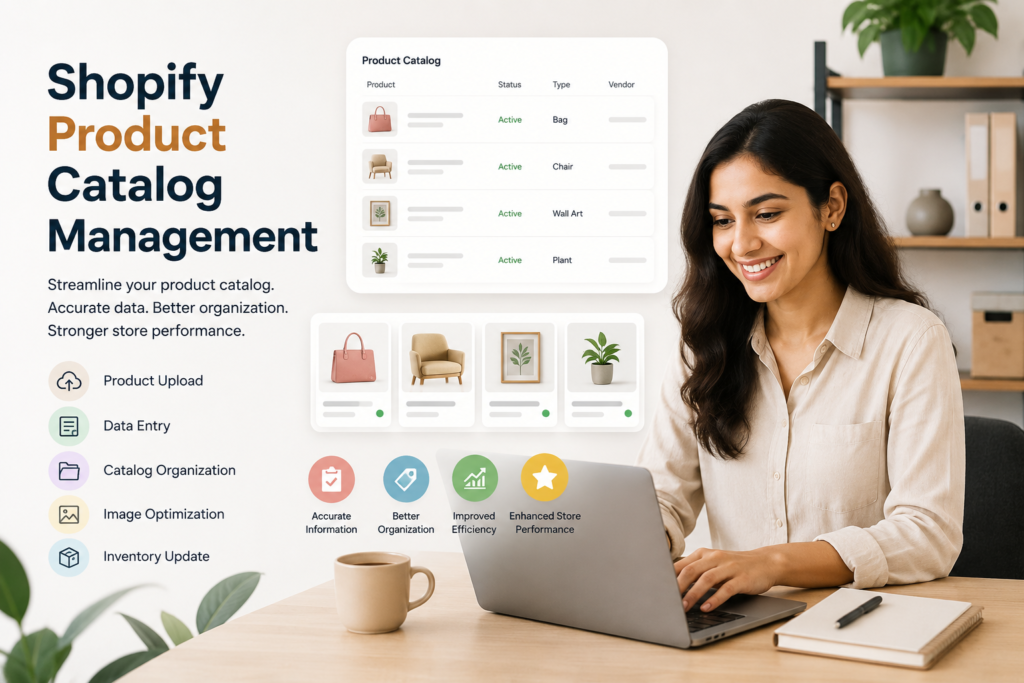
Running a successful online store often comes down to how well you handle the behind-the-scenes details. When inventory grows, product updates become overwhelming, and category pages get messy, shopper frustration follows quickly. That is where Shopify Product Catalog Management comes into play. Partnering with a dedicated service like Shopify Store Manager allows ecommerce store owners, online retailers, and growing DTC brands to streamline product data, eliminate customer friction, and unlock sustainable revenue growth.
Understanding Shopify Product Catalog Management
At its core, Shopify Product Catalog Management is the strategic process of organizing, enriching, and maintaining all product information within your online storefront. It encompasses far more than simply uploading a high-resolution image and writing a basic description.
A structured catalog management strategy covers:
Product Taxonomy & Categorization: Organizing items into intuitive collections, categories, and tags.
Variant & Attribute Management: Managing complex options like sizes, colors, and materials without creating clutter.
Metafields & Custom Specifications: Storing detailed technical details, care instructions, and materials to give shoppers full context.
Inventory & Multi-Channel Syncing: Keeping pricing, stock levels, and specs uniform across social channels and marketplaces.
Whether you run a fast-paced apparel brand or a curated home decor store, keeping this information clean and accurate ensures your store operates smoothly as you scale.
Why Catalog Management Drives Ecommerce Scalability
Many small business owners focus heavily on paid ads to drive traffic. However, sending traffic to a disorganized catalog leads to high bounce rates and abandoned carts. Proper catalog maintenance transforms your site’s operational efficiency and bottom line.
1. Enhances User Experience and On-Site Navigation
Shoppers value speed and simplicity. Clear navigation menus, accurate search filters, and structured collections help customers find what they want in seconds. When product options and availability are transparent, buyers make purchasing decisions with confidence, boosting your conversion rate.
2. Strengthens Search Engine and Channel Visibility
Search engines reward clean, structured product data. Standardized categories, rich titles, and accurate tags make your listings eligible for rich search snippets and marketplace placements. Proper optimization means search engines—and emerging AI shopping tools—can index and highlight your products effortlessly.
3. Reduces Order Returns and Operational Drag
Inaccurate sizing charts, missing specs, or mismatched images are top causes for product returns. By maintaining accurate specifications and clean variant data, medium-sized businesses and enterprise brands avoid customer disappointment while cutting down time spent on manual catalog fixes.
Best Practices for Mastering Your Store Catalog
To keep your catalog optimized as your product range expands, implement these key practices:
Standardize Product Titles and Descriptions: Follow consistent formats across every collection so shoppers know what to expect.
Leverage Tags and Metafields: Use descriptive tags for automated collections and metafields for technical details.
Utilize Bulk Management Tools: Take advantage of CSV imports and bulk editors to update pricing, inventory, and tags across hundreds of SKUs at once.
Audit Catalog Data Regularly: Schedule routine checkups to retire discontinued SKUs, fix broken links, and update seasonal collections.
Take Your Ecommerce Business to the Next Level
Managing hundreds or thousands of SKUs requires time, precision, and expertise. Instead of spending valuable hours troubleshooting product listings or updating inventory tags, let the experts take the wheel.
Mastering Shopify Product Catalog Management is essential for creating a seamless shopping experience that converts visitors into loyal customers. Team up with Shopify Store Manager today to optimize your product data, eliminate operational bottlenecks, and fuel your brand’s growth.