
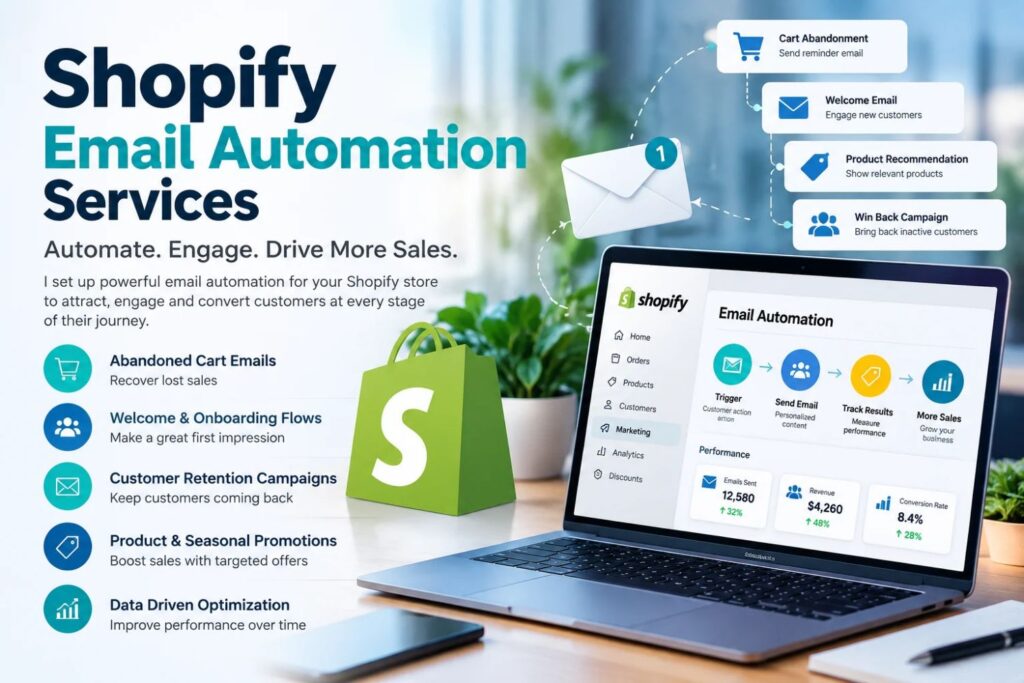
Most Shopify owners know email works. The harder part is finding the time to send the right message to the right customer at the right moment. That is where Shopify email automation services come in. Instead of sending one-off campaigns by hand, you set up triggered messages that run in the background and respond to what shoppers actually do on your store.
This article explains how automation lifts sales, which flows matter most, and what to watch out for.
What Are Shopify Email Automation Services?
Shopify email automation services cover the strategy, setup, copywriting, and ongoing management of automated email flows. A provider typically connects your store to an email platform such as Klaviyo, Omnisend, or Shopify Email, then builds sequences triggered by customer behavior: signing up, abandoning a cart, buying, or going quiet.
How Automation Increases Store Sales
Recovering Abandoned Carts
Many shoppers add items to their cart and leave. An abandoned cart email reminds them of what they left behind, and a follow-up can address common hesitations such as shipping costs or sizing. This is often the first flow worth building because it targets buyers who already showed intent.
Welcoming New Subscribers
A welcome series introduces your brand, shares your story, and guides new subscribers toward a first purchase. People are most attentive right after signing up, so this flow often earns strong engagement.
Encouraging Repeat Purchases
Acquiring a new customer usually costs more than selling again to an existing one. Post-purchase flows can:
- Thank the customer and confirm what happens next
- Share usage tips or care instructions
- Suggest complementary products
- Request a review at the right time
Winning Back Lapsed Customers
A win-back flow reaches customers who haven’t purchased in a while. A reminder of what’s new, or a modest incentive, can bring some of them back.
Personalizing Product Recommendations
Segmentation lets you send different messages based on purchase history, browsing behavior, or order value. A first-time buyer and a loyal repeat customer shouldn’t receive the same email.
Key Considerations Before You Start
- Clean data: Accurate customer and product data keeps flows relevant.
- Consent and compliance: Follow rules such as GDPR, CAN-SPAM, and local privacy laws, and always include an unsubscribe option.
- Deliverability: Authenticate your sending domain (SPF, DKIM, DMARC) so emails reach the inbox.
- Brand voice: Automated emails should sound like you, not like a template.
Common Challenges and Solutions
Too many emails. Overlapping flows can bombard customers. Set suppression rules so someone in a cart flow doesn’t also receive a promotional blast.
Generic content. Use dynamic product blocks and customer names sparingly, and write copy that answers real questions.
No testing. Test subject lines, send times, and offers one at a time, then review open rates, click rates, and revenue per recipient.
Practical Example
Imagine a store selling skincare. A shopper subscribes, receives a welcome email with a skin-type guide, buys a moisturizer, and weeks later gets a reminder as the product runs low. None of this needs manual effort once the flows are built.
FAQs
What is the best email platform for Shopify automation?
It depends on your size and budget. Shopify Email suits basic needs, while Klaviyo and Omnisend offer deeper segmentation.
Which automated email flow should I set up first?
Start with abandoned cart, then a welcome series.
How many emails should an abandoned cart flow include?
Many stores use two to three, spaced over a few days. Test to find what suits your audience.
Can small stores benefit from automation?
Yes. Automation saves time, which matters most for small teams.
Do I need a service provider, or can I do it myself?
You can start yourself, but a provider helps with strategy, copywriting, and optimization.
How long until I see results?
Some flows, like abandoned cart, can show results quickly. Others improve as you gather data.
Is automation compliant with privacy laws?
Only if you collect proper consent and honor unsubscribe requests.
Conclusion
Email automation works because it meets customers where they are in their buying journey. Well-built flows recover lost sales, nurture new subscribers, and bring buyers back without constant manual effort. If you’d like expert help planning and managing yours, Shopify Store Manager can help you build automated flows that fit your store. Get in touch to talk through your goals.