
Your Shopify store is live, products are listed, and traffic trickles in, yet sales feel stuck. If that sounds familiar, the problem is rarely one big failure. It is usually a handful of small, fixable mistakes adding up. This is where professional shopify store management services make a real difference: they bring structure, regular maintenance, and an outside eye to problems store owners are often too close to see.
At Shopify Store Manager, we regularly see the same issues across stores of every size. Here are the ten most common ones and how they get fixed.
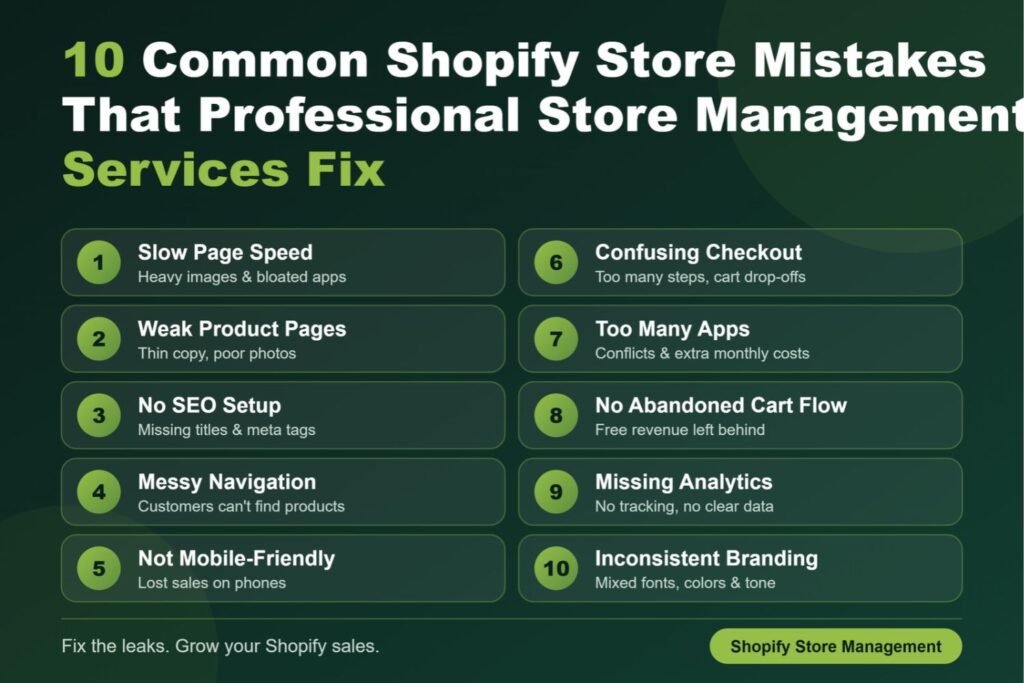
The 10 Mistakes Holding Your Store Back
1. Slow Page Speed
Oversized images, too many apps, and bloated themes slow stores down. Shoppers rarely wait around. Managers compress media, remove unused apps, and clean up theme code.
2. Poor Mobile Experience
Most Shopify traffic comes from phones. Tiny buttons, cramped menus, and hard-to-use filters cost sales. A good manager tests the full journey on real devices.
3. Weak Product Descriptions
Copy-pasted manufacturer text hurts both conversions and rankings. Professionals write unique, benefit-led descriptions that answer buyer questions.
4. Ignoring On-Page SEO
Missing meta titles, duplicate content, and vague image alt text make products harder to find. Managers apply consistent Shopify SEO practices across collections, products, and blogs.
5. Confusing Navigation and Collections
If visitors cannot find products in a few clicks, they leave. Clear categories, logical menus, and useful filters improve store usability.
6. A Complicated Checkout
Forced account creation, hidden shipping costs, and limited payment options drive cart abandonment. Simplifying checkout is one of the highest-impact fixes available.
7. App Overload
Every installed app adds code and cost. Experts audit your stack and keep only what earns its place.
8. No Abandoned Cart Recovery
Many stores never follow up with shoppers who leave items behind. Setting up well-timed email or SMS reminders recovers sales that would otherwise be lost.
9. Neglected Analytics
Without tracking, you are guessing. Managers configure Google Analytics, conversion tracking, and reporting so decisions rest on data, not instinct.
10. Inconsistent Maintenance
Broken links, out-of-stock products left live, outdated banners, and unresolved errors quietly erode trust. Ongoing Shopify store maintenance prevents small issues from piling up.
What to Look for in Professional Store Management Services
Not every provider offers the same scope. When comparing options, consider:
- Clear deliverables: Product uploads, SEO, speed optimization, and reporting should be spelled out.
- Relevant experience: Look for work on stores similar in size and niche to yours.
- Transparent communication: Regular updates and straightforward reporting matter.
- Flexible support: Your needs will change as the store grows.
Why Ongoing Management Beats One-Time Fixes
A one-off cleanup helps, but ecommerce changes constantly. Themes update, apps conflict, and search algorithms evolve. Ecommerce store management works best as a continuous process: audit, fix, monitor, improve. That steady attention frees you to focus on sourcing, marketing, and customers.
Frequently Asked Questions
1. What do professional store management services include?
Typically product management, SEO, speed optimization, app and theme maintenance, order support, and performance reporting.
2. How do I know if my store needs help?
Warning signs include low conversion rates, high cart abandonment, slow loading, and traffic that does not turn into sales.
3. Is hiring a Shopify store manager worth it for a small store?
Often, yes. Outsourcing routine work can be more practical than hiring in-house, especially while you are still growing.
4. How long before I see results?
Technical fixes like speed and checkout improvements can show effects quickly. SEO gains usually take several months.
5. Will I lose control of my store?
No. You keep ownership and access, and a good provider works with your approval and goals.
6. Can a manager help with SEO too?
Yes. Many services handle on-page optimization, content, and technical SEO as part of store management.
7. How much do these services cost?
Pricing varies by scope, store size, and provider, so request a clear quote based on your needs.
Conclusion
Most Shopify stores do not fail because of a bad idea. They stall because of avoidable mistakes in speed, content, checkout, and upkeep. Addressing them systematically can turn an underperforming store into a reliable sales channel, and professional Shopify store management services give you the expertise and consistency to do that.
Ready to find out what is holding your store back? Contact Shopify Store Manager for a store review and a practical plan to fix it.