
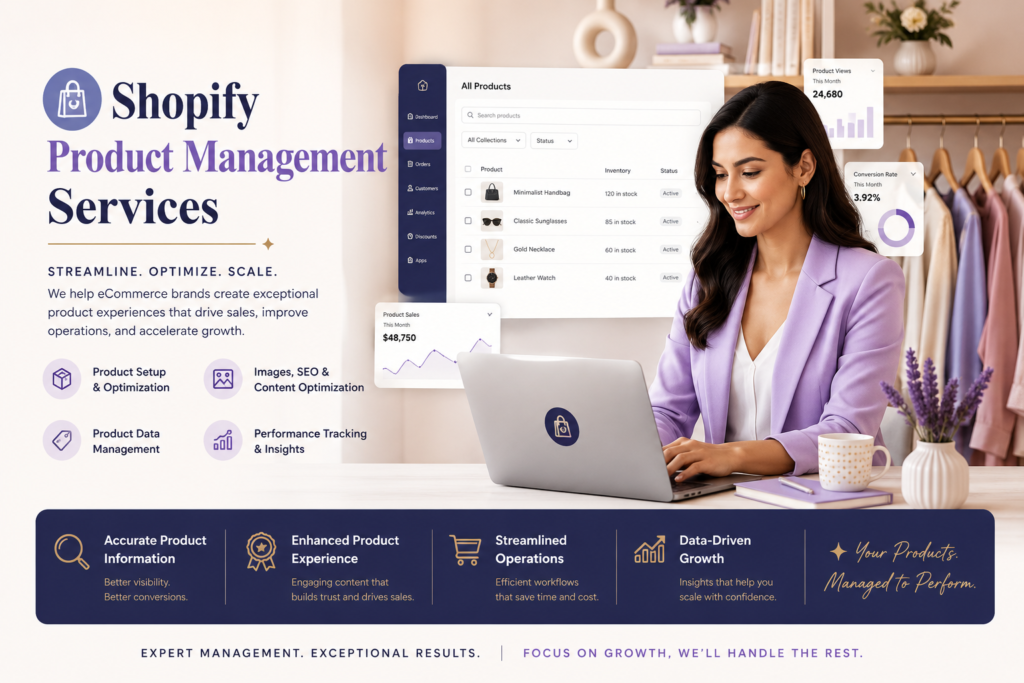
Running an online store is an exciting journey, but as your business grows, handling everything on your own can become overwhelming. Between uploading new arrivals, updating inventory levels, organizing collections, and optimizing product pages for search engines, product management takes up hours of your valuable time every single day. For busy store owners, outsourcing these tedious tasks is the ultimate game-changer. But a major question always pops up: how much do Shopify Product Management Services cost in 2026?
At Shopify Store Manager, we understand that clear, transparent pricing helps you make the best decisions for your growing brand. In this comprehensive guide, we will break down the true costs of hiring professional product management help this year so you can budget effectively and scale your business with ease.
Understanding Shopify Product Management Services
Before diving into the numbers, it helps to understand exactly what these services include. Product management isn’t just about clicking “add product” in your dashboard. It involves a strategic mix of technical accuracy, data organization, and creative merchandising designed to convert visitors into buyers.
When you invest in professional assistance, your service provider typically handles:
SKU and Inventory Management: Keeping stock counts accurate across multiple locations, variants, and channels.
Product Data Entry: Accurately inputting titles, tags, weights, and vendor information.
SEO Optimization: Writing keyword-rich product descriptions, alt text for images, and clean meta titles.
Collection Curation: Organizing items into automated or manual collections to make browsing seamless for your customers.
How Much Do Shopify Product Management Services Cost in 2026?
The overall investment required for professional catalog care depends heavily on your store’s size, complexity, and how often your inventory changes. Generally, providers offer pricing models based on hourly rates, per-product flat fees, or monthly retainers.
1. Hourly Rates (Best for Quick Fixes)
If you run a boutique store and only need periodic updates—like launching a small seasonal collection—hiring a professional on an hourly basis is a highly flexible option. In 2026, hourly rates typically range from $20 to $75 per hour for experienced freelancers. For specialized agencies handling complex variant logic or custom data mapping, rates can range between $75 and $150 per hour.
2. Per-Product Project Pricing (Best for Initial Setup or Migrations)
If you are migrating a large database from another platform or launching a brand-new store with hundreds of items, flat per-product pricing is incredibly popular. This gives you predictable upfront costs.
Simple Products: $1 to $3 per SKU (Standard items with few variations).
Complex Products: $4 to $10+ per SKU (Items with multiple drop-down options like sizes, colors, materials, or custom personalization fields).
3. Monthly Retainers (Best for Consistent Growth)
For established brands requiring daily attention, a dedicated monthly retainer ensures your store remains flawless.
Startup and Emerging Brands: Expect to invest $300 to $800 per month. This tier is ideal for solo founders, dropshipping businesses, and small catalog stores needing basic support.
Mid-Market and Growing Brands: Expect to invest $800 to $2,500 per month. This tier is designed for rapidly scaling D2C brands, boutique fashion labels, and multi-channel retailers.
Enterprise and Shopify Plus Stores: Expect to invest $2,500 to $6,000+ per month. This premium tier is necessary for large-scale stores with thousands of SKUs, complex ERP integrations, and global storefronts.
Factors That Influence Your Overall Cost
No two eCommerce stores are exactly alike, and several key elements will shift your quote toward the higher or lower end of the pricing spectrum:
Catalog Complexity: A brand selling a single-variant tech accessory requires far less setup time than a clothing store dealing with complex size charts, colorways, and fabric variations.
Quality of Existing Data: Providing a clean, well-organized CSV spreadsheet with ready-to-use image links lowers the required labor time significantly. If a provider has to manually scrape data from supplier PDFs or crop raw images, your costs will increase.
Frequency of Updates: Fast-moving dropshipping businesses or fashion brands that drop new arrivals weekly require continuous, high-frequency management compared to stores with static, year-round product lines.
Choosing the Right Fit for Your Brand
Finding the perfect balance between your budget and your operational needs is key to a high return on investment.
Freelancers vs. Dedicated Agencies
Hiring individual freelancers via popular marketplaces can be very cost-effective for smaller, straightforward tasks. However, growing brands often find that managing multiple freelancers creates a brand-new management headache. Partnering with a specialized team offers reliable quality control, faster turnaround times, and a comprehensive approach that blends technical execution with retail strategy.
Conclusion: Let Us Handle Your Catalog
Investing in professional support is one of the smartest ways to reclaim your time, reduce expensive fulfillment mistakes, and present a polished storefront to your customers. Now that you know what Shopify Product Management Services cost in 2026, you can choose a path forward that fits your brand’s unique growth goals.
Stop spending your late nights wrestling with spreadsheets and bulk editors. Let the experts at Shopify Store Manager breathe life into your online catalog while you focus on marketing, branding, and high-level strategy. Contact us today to receive a tailored quotation and discover how we can help optimize your backend operations for maximum profitability!