
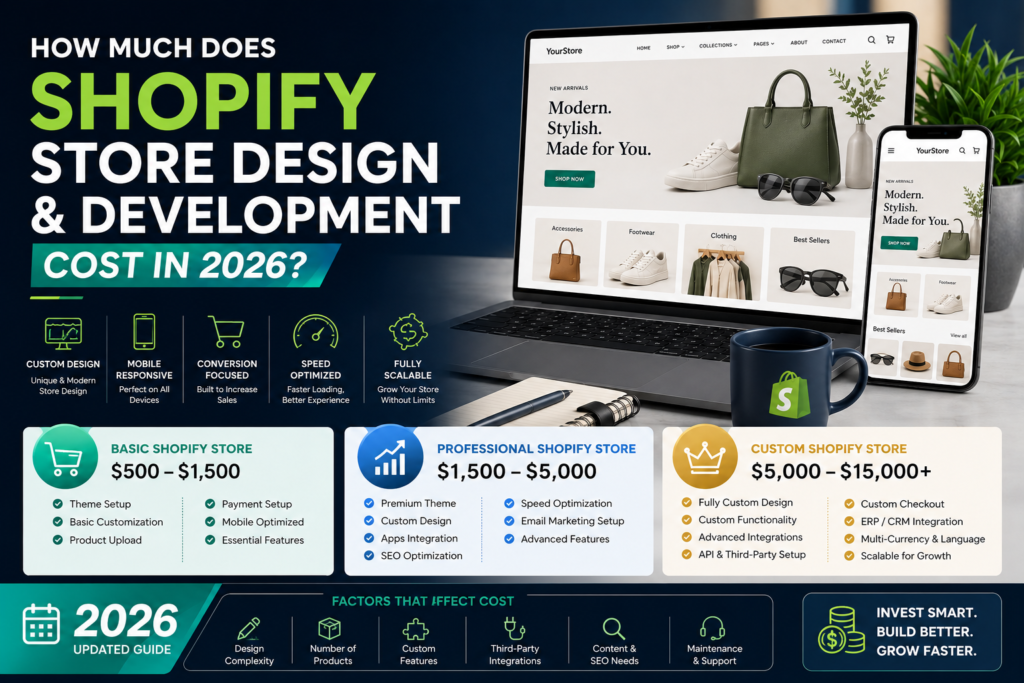
For entrepreneurs and small business owners, trying to figure out exactly how much a new e-commerce website will cost can feel like a guessing game. You might look at one tutorial that says you can open a shop for under $50, while an agency quote says it will cost tens of thousands. If you are trying to budget realistically, getting to the bottom of Shopify store design and development pricing is your very first hurdle. At Shopify Store Manager, we believe in complete transparency. Knowing how these costs are structured helps you invest wisely without overspending or cutting critical corners.
Whether you are startup founders launching a niche brand, retail business owners taking a brick-and-mortar shop online, or managing growing jewelry brands and clothing brands, this 2026 pricing breakdown will help you plan your budget with confidence.
The True Cost of Shopify Store Design and Development
The overall price tag of an e-commerce storefront is never just a single flat fee. Instead, it is a combination of your platform subscription, your theme setup, and the actual technical labor required to build your pages.
Depending on your specific needs, professional Shopify store design and development projects generally fall into three distinct tiers in 2026:
The Template Setup ($500 to $2,000): Ideal for brand-new ecommerce business owners or solo entrepreneurs with small catalogs (10–50 products). This involves installing a free or premium pre-built theme, setting up basic payment gateways, and organizing your core collections.
The Custom-Tailored Build ($2,000 to $10,000): This is the sweet spot for growing fashion brands, skincare brands, and home decor stores. It includes a custom-configured theme architecture, custom Liquid and CSS coding for unique interactive elements, personalized product pages, and advanced search filters.
The Advanced Enterprise Store ($10,000 to $25,000+): Built for scaling businesses, large furniture retailers, or high-volume beauty and cosmetics brands. This tier covers deep custom UI/UX design via Figma, multi-warehouse shipping setups, advanced third-party integrations, and complex backend workflows.
3 Key Drivers That Impact Your Development Budget
If you want to keep your project costs manageable, it is vital to understand what pushes a developer’s invoice up or down.
1. Catalog Size and Structural Complexity
Uploading 15 straightforward products takes significantly less time than importing a catalog of 2,000 items with intricate variant options (like size, color, and material matrixes). Complex data migration from a legacy website always adds to the development timeline.
2. Custom Liquid Coding vs. App Reliance
When pre-built theme components cannot support a unique design layout—such as interactive product builders or specialized size charts—front-end engineers must write custom code. While this requires a higher upfront investment, it protects your site’s loading speed and minimizes recurring monthly app subscription fees.
3. Essential Marketing and Automation Integrations
A high-converting storefront requires a functional ecosystem. Budgeting for your setup should always account for the time it takes to integrate and test critical tools:
Automated WhatsApp and SMS notifications for order tracking.
Email marketing flows (like abandoned cart recovery).
Customer review widgets and social proof carousels.
Advanced inventory synchronization across multiple brick-and-mortar locations.
Tailoring the Budget to Your Specific Niche
Different industries have vastly different functional requirements, which naturally alters the ultimate cost of building the store.
Highly Visual Lifestyle Brands
For fitness brands, clothing brands, and health and wellness brands, conversion rates live and die by visual storytelling. This means your budget will need to accommodate high-end media layouts, video banner loops that load asynchronously without lag, and smooth color swatch transitions on your collection pages.
Trust-Heavy Product Industries
If you are launching a skincare brand, customers demand extensive information before hitting the buy button. Your development needs will include specialized product page accordions for ingredient transparency, certificate badges, and dedicated sections for customer reviews and star ratings.
Making the Right Investment for Your Business
Building a modern e-commerce storefront is one of the most significant steps you can take for your brand’s growth. The smartest way to approach the financial side is to match your initial budget to your immediate business problem—you can always scale your site features as your revenue grows.
When you want to ensure every dollar spent translates directly into a faster, smoother, and higher-converting experience for your shoppers, professional Shopify store design and development is the ultimate differentiator. The expert team at Shopify Store Manager is here to help you build a beautiful, high-performing digital storefront tailored exactly to your brand’s unique needs and goals. Contact us today to get a precise quote and bring your dream store to life!