
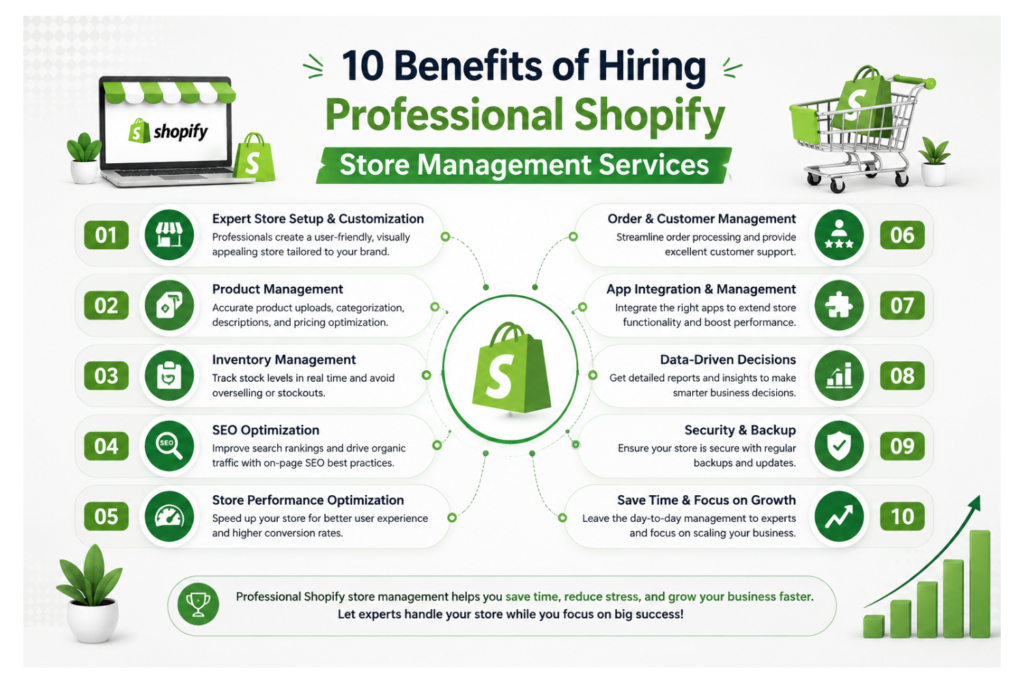
Running a Shopify store sounds simple until you’re three months in, juggling inventory updates, abandoned cart emails, app conflicts, and a checkout bug that’s quietly killing your conversion rate. Most store owners didn’t start their business because they wanted to become full-time website administrators — they started it because they had a product worth selling.
That’s where professional Shopify Store Management Services come in. Instead of stretching yourself thin across marketing, tech maintenance, and customer service, you hand the operational weight to people who do this for a living. Whether you’re a solo entrepreneur or scaling a multi-six-figure brand, the right management partner can be the difference between a store that survives and one that grows steadily.
Here’s what you actually gain when you bring in expert help.
1. Time Back to Focus on Growth
Every hour spent fixing a broken theme or troubleshooting a payment gateway is an hour not spent on product development, partnerships, or strategy. Outsourcing routine store operations frees up your calendar for the decisions only you can make.
2. Fewer Costly Technical Errors
A mistimed app update or a poorly tested code change can take your store offline during a sale. Experienced managers understand Shopify’s backend well enough to catch issues before they become emergencies, reducing downtime and lost revenue.
3. Better Store Performance and Speed
Page load times directly affect both conversions and search rankings. Professionals know how to audit apps, compress images, and clean up unnecessary scripts that slow a store down — something most owners never think to check.
4. Consistent Inventory and Order Management
As order volume grows, manual tracking becomes unreliable. Store management services set up systems for accurate stock levels, order fulfillment workflows, and syncing across sales channels, cutting down on overselling and shipping delays.
5. Ongoing SEO and Conversion Optimization
A store that isn’t actively optimized tends to plateau. Management teams typically handle on-page SEO, product page structuring, and conversion rate testing — adjustments that compound over time rather than a one-off fix.
Why This Matters Long-Term
SEO isn’t a “set it and forget it” task. Search algorithms shift, competitors adjust, and product catalogs change. Ongoing attention keeps a store visible instead of slowly losing organic traffic.
6. Smoother App and Theme Management
Shopify’s app ecosystem is powerful but easy to overload. Too many apps can conflict, slow the site, or create checkout errors. Professionals know which apps are worth keeping, which are redundant, and how to configure themes without breaking functionality.
7. Reliable Data Security and Compliance
Payment processing, customer data, and platform updates all carry compliance considerations. A management service helps ensure your store follows current best practices for data handling and security, reducing risk for both you and your customers.
8. Scalable Support as You Grow
What works for a store doing 50 orders a month won’t work at 5,000. Professional teams build systems — automation, workflows, reporting — that scale with the business instead of requiring a rebuild every time you hit a growth milestone.
9. Access to Specialized Expertise
Design, development, marketing, and analytics rarely live in one person’s skill set. A management service typically brings a team with cross-functional experience, so you’re not relying on trial and error to solve problems outside your expertise.
10. Data-Driven Decision Making
Instead of guessing what’s working, professional managers track performance metrics — traffic sources, conversion rates, cart abandonment — and use that data to guide ongoing improvements rather than one-time fixes.
Common Challenges Store Owners Face Without Support
- Spending hours on tasks outside their expertise
- Missing early warning signs of technical issues
- Inconsistent branding across pages and campaigns
- Difficulty keeping up with Shopify platform updates
- Slow response to customer service or fulfillment issues
Professional management doesn’t eliminate every challenge, but it puts a system in place to catch and address them before they affect revenue.
FAQs
What do Shopify Store Management Services actually include?
Typically store maintenance, app and theme management, SEO, inventory oversight, performance monitoring, and ongoing optimization — though scope varies by provider.
Is this only for large stores?
No. Small and growing stores often benefit the most, since owners are usually handling everything themselves.
Will I lose control over my store?
No. You retain full ownership and decision-making; the service handles execution and day-to-day operations.
How much do these services typically cost?
Pricing varies widely based on store size, scope of work, and whether it’s a one-time project or ongoing retainer. It’s best to request a quote based on your specific needs.
Can management services help with an underperforming store?
Yes — auditing existing issues (speed, SEO, UX, app conflicts) is a common starting point for many providers.
Do I still need my own marketing team?
Not necessarily. Many management services offer marketing support, though some store owners prefer to keep that in-house while outsourcing operations.
Final Thoughts
A Shopify store is never really “finished” — it needs ongoing attention to stay competitive. Partnering with a professional management service like Shopify Store Manager lets you offload the technical and operational load while keeping your focus where it belongs: building the brand and products your customers actually want.
If your store has been running on guesswork and late-night troubleshooting, it might be time to bring in a team that handles this every day. Reach out to Shopify Store Manager to see how professional support could fit your store’s next stage of growth.