
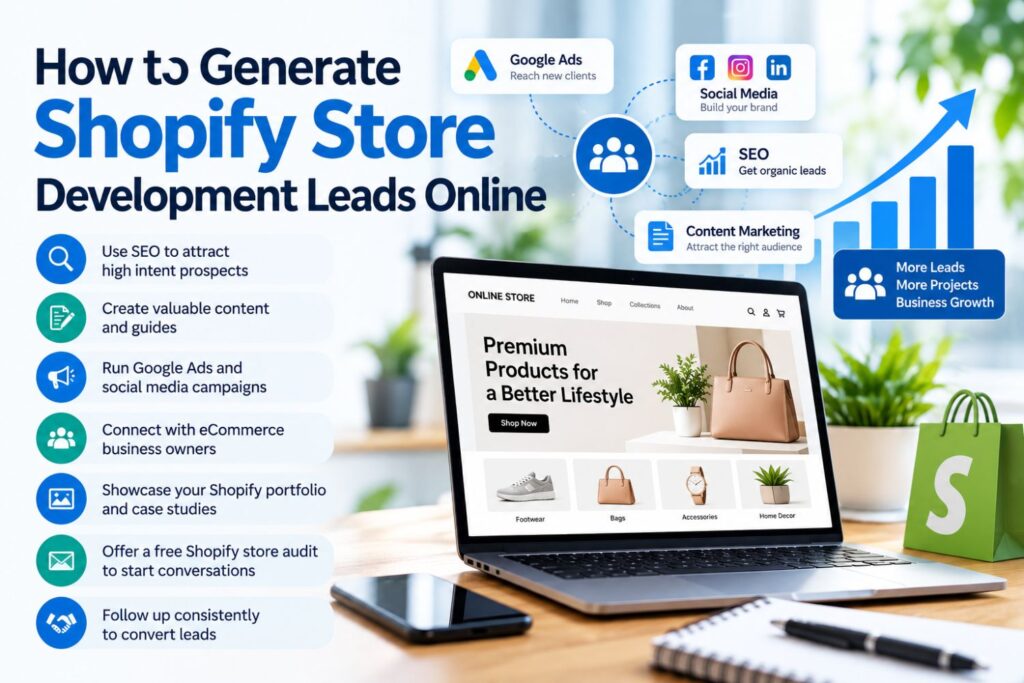
If you offer Shopify store development services, you already know the problem: plenty of merchants need help, but few of them find you at the moment they’re ready to hire. Referrals dry up, marketplaces push prices down, and cold outreach rarely gets a reply.
The fix is a steady system that attracts merchants who are already searching for help. Here is how to build one.
Start With a Clear Offer
Vague positioning (“we build websites”) attracts vague inquiries. Decide who you serve and what you solve.
- Niche: fashion brands, subscription products, B2B wholesale, or stores migrating from WooCommerce or Magento.
- Service: custom theme development, store redesign, Shopify Plus setup, app integration, or speed optimization.
- Outcome: describe the result, such as a faster checkout or a cleaner product catalog, without promising specific revenue numbers.
Build a Website That Converts
Your own site is your best sales asset. Merchants judge your Shopify skills by how well you present yourself.
Create Dedicated Service Pages
Give each core service its own page, such as “Shopify theme customization” or “Shopify migration services.” Each page should explain the process, timeline, and typical deliverables, and end with one clear call to action.
Show Proof
Case studies work better than testimonials alone. Cover the store’s problem, what you changed, and the result. Only cite metrics you can verify with client permission.
Use SEO to Capture Search Demand
Merchants search for solutions before they contact anyone. Target phrases like “hire a Shopify developer,” “Shopify store setup cost,” and “Shopify Plus agency.”
- Publish helpful guides on migration, theme choices, and store speed.
- Write comparison content, such as custom theme versus premium theme.
- Add a short lead form or booking link to relevant posts.
Build Authority Through Content and Community
Sharing practical knowledge builds trust before the first call.
- Post short breakdowns of store improvements on LinkedIn.
- Answer questions in the Shopify Community forums and e-commerce groups.
- Share before-and-after walkthroughs of real projects, with client approval.
Use Paid and Direct Channels Carefully
Google Ads can capture high-intent searches like “Shopify developer near me” or “Shopify store development company.” Start with a small budget and track cost per qualified lead, not just clicks.
For outreach, personalize every message. Review a merchant’s store first, note one specific issue such as slow load times or a confusing navigation, and offer a helpful observation rather than a sales pitch.
Common Challenges and Fixes
- Price shoppers: publish starting ranges or project tiers to filter early.
- Low-quality leads: add form questions on budget, timeline, and goals.
- Slow follow-up: respond within one business day; speed signals reliability.
- Inconsistent pipeline: commit to a monthly content and outreach schedule.
Frequently Asked Questions
1. What are Shopify store development services?
They cover building or improving a Shopify store, including theme design, custom features, app integration, migration, and performance work.
2. Where do agencies find the best leads?
Usually through organic search, referrals, LinkedIn, and the Shopify Partner ecosystem.
3. Is SEO or paid advertising better?
SEO builds slowly but compounds. Paid ads bring faster traffic at ongoing cost. Many teams use both.
4. How long does lead generation take to work?
Outreach and ads can produce inquiries within weeks. SEO typically takes several months.
5. Do case studies really matter?
Yes. They show how you solve problems, which reassures cautious buyers.
6. How should I qualify leads?
Ask about budget, timeline, current platform, and goals before scheduling a call.
Conclusion
Consistent lead generation for Shopify store development services comes down to a focused offer, a credible website, useful content, and prompt follow-up. Pick two channels, execute them well, and measure the results before adding more.
At Shopify Store Manager, we help merchants plan, build, and maintain stores that run smoothly. If you’re ready to discuss your project, get in touch for a no-obligation consultation.