
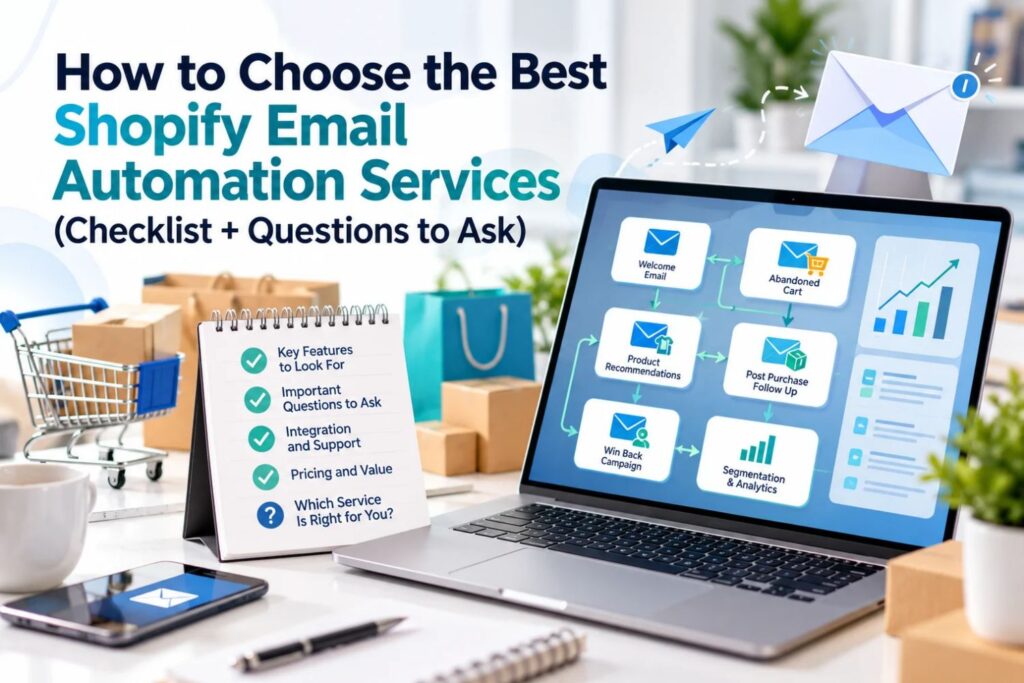
Email is still one of the most dependable ways to bring shoppers back to your store, but only if it runs on time and says the right thing. Most store owners know they should have a welcome series and an abandoned cart flow. The harder part is finding a partner who can build and maintain them properly.
This guide walks you through how to evaluate Shopify email automation services, what to check before you hire, and which questions separate a capable partner from a risky one.
What Shopify Email Automation Services Actually Include
A good provider does more than switch on a few templates. Typical work covers:
- Flow strategy and setup (welcome, abandoned cart, browse abandonment, post-purchase, win-back)
- Audience segmentation based on purchase history and behavior
- Email design and copywriting
- Integration with your email platform, such as Klaviyo, Omnisend, or Shopify Email
- Testing, reporting, and ongoing optimization
If a provider only offers one-off template design, you are buying design, not automation.
Why the Right Partner Matters
Poorly built flows cause real damage: duplicate emails, wrong discount codes, messages sent to customers who already bought, and deliverability problems that push your emails into spam. A skilled team prevents these issues and keeps your Shopify email marketing automation working quietly in the background.
The Checklist: What to Look for Before You Hire
1. Platform Expertise
Ask which email tools they use daily. A provider should understand Shopify data (products, collections, customer tags, order events) and how it feeds into your email platform.
2. Strategy Before Setup
Look for a team that asks about your margins, repeat purchase cycle, and customer types before building anything. Generic flows rarely fit every store.
3. Segmentation Ability
Sending the same email to everyone is the most common mistake. Your partner should be able to segment by purchase frequency, product interest, and engagement level.
4. Deliverability Knowledge
They should understand domain authentication (SPF, DKIM, DMARC), list hygiene, and sender reputation. Without these, even great emails may never reach the inbox.
5. Transparent Reporting
Expect clear reporting on open rates, click rates, revenue attributed to flows, and unsubscribe trends. Be aware that open rate data has become less reliable since mail privacy changes, so a good partner will focus on clicks and revenue as well.
6. Compliance Awareness
Your provider should handle consent, unsubscribe links, and regional rules such as GDPR and CAN-SPAM properly.
Questions to Ask Before Signing
- Can you show examples of flows you built for stores like mine?
- How do you decide which flows to build first?
- How do you test subject lines, send times, and offers?
- Who owns the account and flow setups if we part ways?
- How often will we get reports, and what will they include?
- How do you avoid over-emailing our customers?
- What access do you need to our store and email platform?
Common Challenges and How to Handle Them
Unclear pricing. Ask whether fees are flat, hourly, or tied to revenue, and what is excluded.
Overpromising. Be cautious of anyone guaranteeing specific revenue or open rates. Results depend on your list, products, and offers.
Slow communication. Agree on response times and a point of contact upfront.
Start Small, Then Expand
If you are unsure, begin with the highest-impact flows: abandoned cart, welcome series, and post-purchase. Review results after a couple of months, then add browse abandonment, win-back, and replenishment flows.
FAQ
1. How much do Shopify email automation services cost?
Pricing varies by scope, store size, and provider. Get a written quote that lists what is included.
2. Do I need Klaviyo to automate emails on Shopify?
No. Shopify Email, Omnisend, and others also work. The best choice depends on your list size, budget, and needs.
3. How long does setup take?
Core flows usually take a few weeks, depending on design and approval speed.
4. Which flows should I build first?
Start with welcome, abandoned cart, and post-purchase emails.
5. Can I do this myself instead?
Yes, if you have time and technical comfort. Outsourcing helps when you need segmentation, testing, and consistent upkeep.
6. How do I measure success?
Track flow revenue, click-through rate, conversion rate, and unsubscribe rate over time.
Conclusion
Choosing among Shopify email automation services comes down to strategy, platform knowledge, transparent reporting, and honest communication. Use the checklist and questions above to compare providers side by side.
If you want help building or reviewing your email flows, Shopify Store Manager can support you. Get in touch to discuss your store and the flows that would make the biggest difference.